
CPS guides · Roofing & drainage
Pipe relining vs digging up the pipe: which is better?
It depends on what the camera shows. Relining suits pipes that are cracked or have root intrusion but are still in line, and avoids digging up the yard. Collapsed, badly displaced or undersized pipes usually need to be dug up and replaced. CPS does both, so we recommend whichever suits your pipe, not the one we happen to offer.
By Tim Birmingham, licensed master plumber, CPS · Licensed with the BPC
Updated November 2026
What is pipe relining?
Relining repairs a suitable existing pipe from inside by forming a new lining within it, rather than excavating along the damaged run. The pipe needs to be assessed and prepared so the lining can work.
It may suit cracks or root intrusion where the pipe is still in line. It is not a way to correct every collapse, poor alignment or undersized drain.
When dig-and-replace is needed
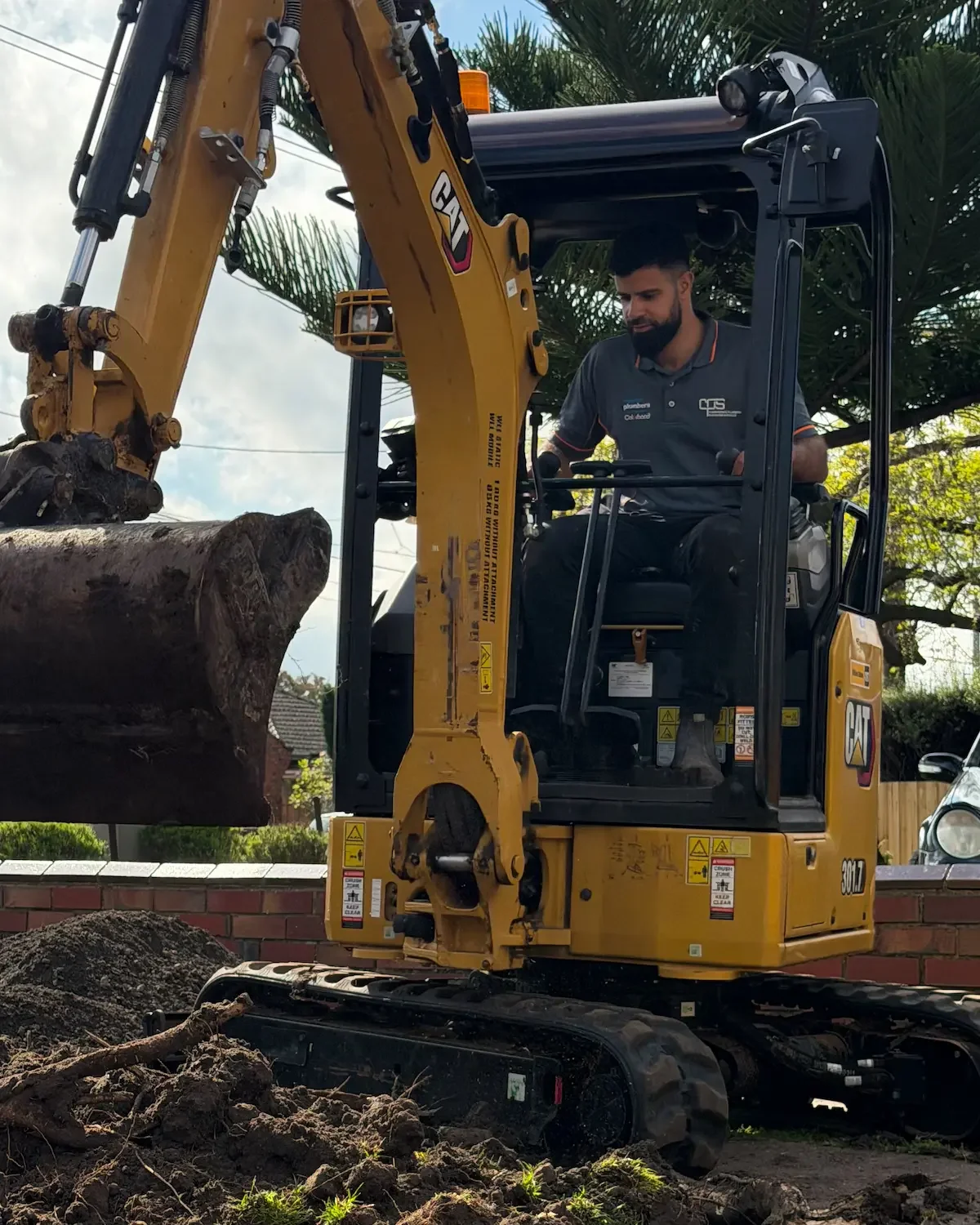
Collapsed, badly displaced or undersized pipes usually need excavation and replacement. Dig-and-replace removes the affected section and installs new pipe, allowing the problem section to be rebuilt rather than lined over.
Depth, access, nearby structures and the surface above the pipe affect the work. CPS explains the affected area and reinstatement in the quote.
Why CCTV comes first
A recurring blockage is a symptom, not a full diagnosis. A CCTV camera lets CPS see accessible pipe condition, including roots, cracks, displacement and collapse, before selecting repairs.
CPS shows the footage and explains what it means. Location and depth can be traced where access and equipment allow, helping define the proposed repair rather than guessing where to dig.
Compare disruption, not just the method's name
Relining avoids excavating along the pipe run when suitable, which can reduce disturbance to a yard or paved surface. It still needs access and preparation; 'no trench' does not mean no work at the property.
Dig-and-replace disturbs the area that must be excavated and may need surface reinstatement. Where the pipe cannot be suitably relined, replacement addresses faults that an internal lining cannot correct.
CPS offers both repair options
CPS does both relining and dig-and-replace. We recommend the option that suits the pipe condition shown by the camera, not simply the method we happen to offer.
Stormwater and sewer work starts from $2,000 + GST. CCTV inspections start from $100 + GST. Pipe length, depth, condition, access and reinstatement affect the final scope. Every job gets a free, no-obligation written quote.
Straight answers
Frequently asked questions
When is pipe relining suitable?
Relining may suit cracked or root-affected pipes that remain in line. CCTV assessment and preparation determine whether the particular pipe can be relined.
Can a collapsed pipe be relined?
Collapsed or badly displaced pipes usually need to be dug up and replaced. Relining is not a substitute for rebuilding an unsuitable pipe section.
Why inspect with CCTV before deciding?
Camera footage shows the accessible pipe condition and helps identify the cause of the fault. The suitable repair follows that assessment, not the blockage symptom alone.
Will relining avoid digging up my yard?
Suitable relining avoids a trench along the pipe run, but access and preparation are still needed. If excavation is required, CPS explains the affected area and reinstatement in the quote.
What are CPS's starting prices?
Stormwater and sewer work starts from $2,000 + GST; CCTV inspections start from $100 + GST. Every job gets a free, no-obligation written quote.
Does CPS offer both methods?
Yes. CPS offers pipe relining and dig-and-replace, selecting the suitable approach after a CCTV inspection.